March 26, 2026 | Chandler Sanchez & Matt Frommer
———————————————————-
By Chandler Sanchez and Matt Frommer
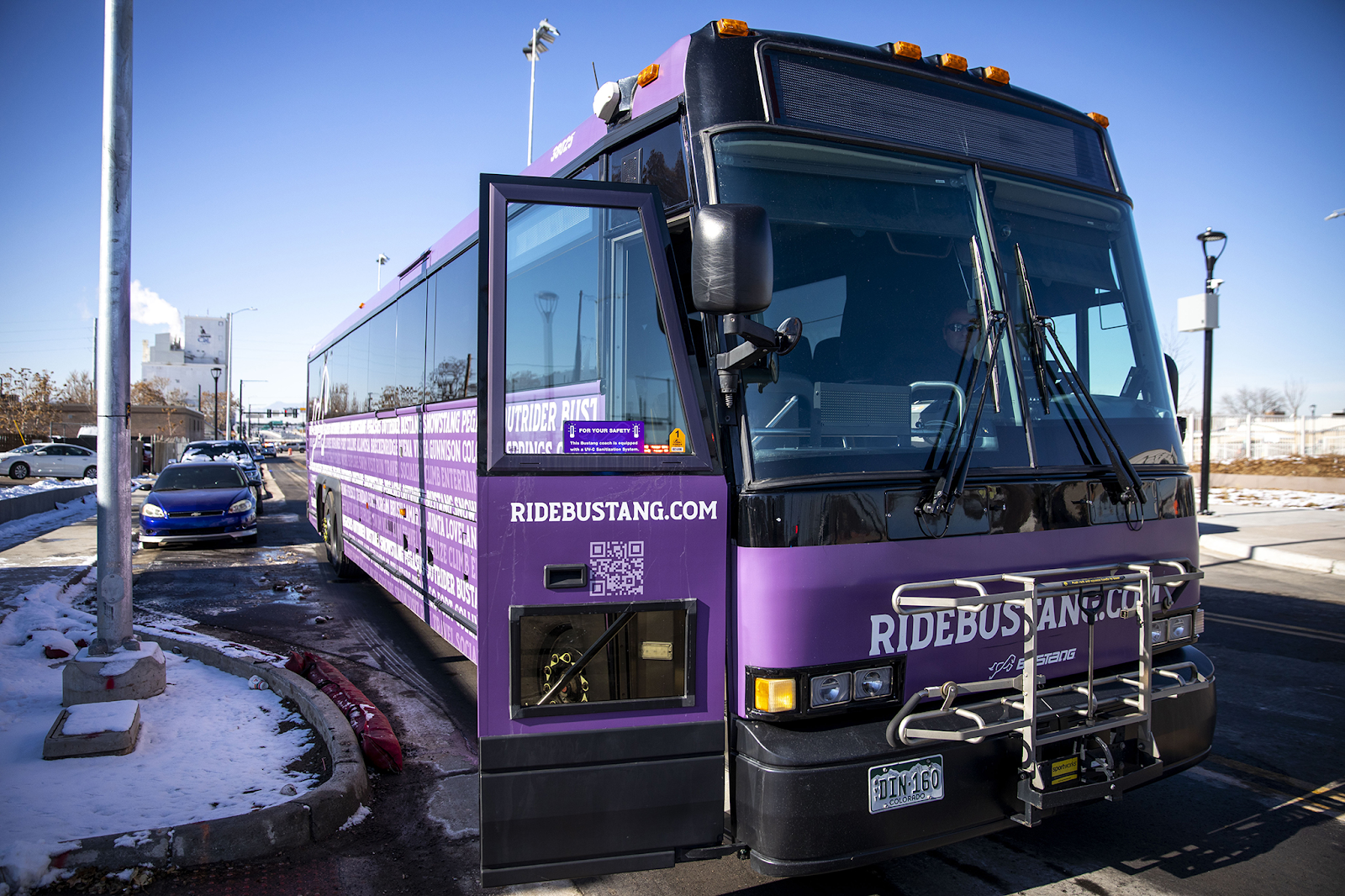
The Colorado Department of Transportation’s (CDOT) intercity Bustang transit service has become a rare transit success story in recent years, earning national recognition as a model for state-led transit expansion that could be replicated across the U.S. Bustang launched in 2015 to connect job centers along Colorado’s I-25 and I-70 corridors. It expanded in 2018 with the Outrider network, reaching communities from Durango to Craig to Sterling to Alamosa. In 2019, CDOT added seasonal services like Snowstang to destinations such as Estes Park, along with Pegasus, smaller shuttles connecting Denver and Vail.
Recognizing strong demand for these services, the Colorado legislature passed Senate Bill 22-180 to fund a three-year expansion pilot and double frequency on key corridors like I-25 North and South and I-70 West. These investments align with Colorado’s goals to reduce congestion and pollution, lower transportation costs, and expand travel options beyond driving. In 2025, the CDOT Commission set a target to grow statewide transit service by 6% annually over the next decade – an 83% increase by 2037.
Bustang’s growth has been dramatic. In 2015, the West Line between Denver and Grand Junction operated just one roundtrip per day. Today, it runs 15 daily roundtrips, with departures from Denver Union Station every 45–60 minutes for much of the day. All of this could change next year as one-time federal and state Bustang funding dries up, which has prompted a conversation at CDOT about potential funding options, like toll revenue.
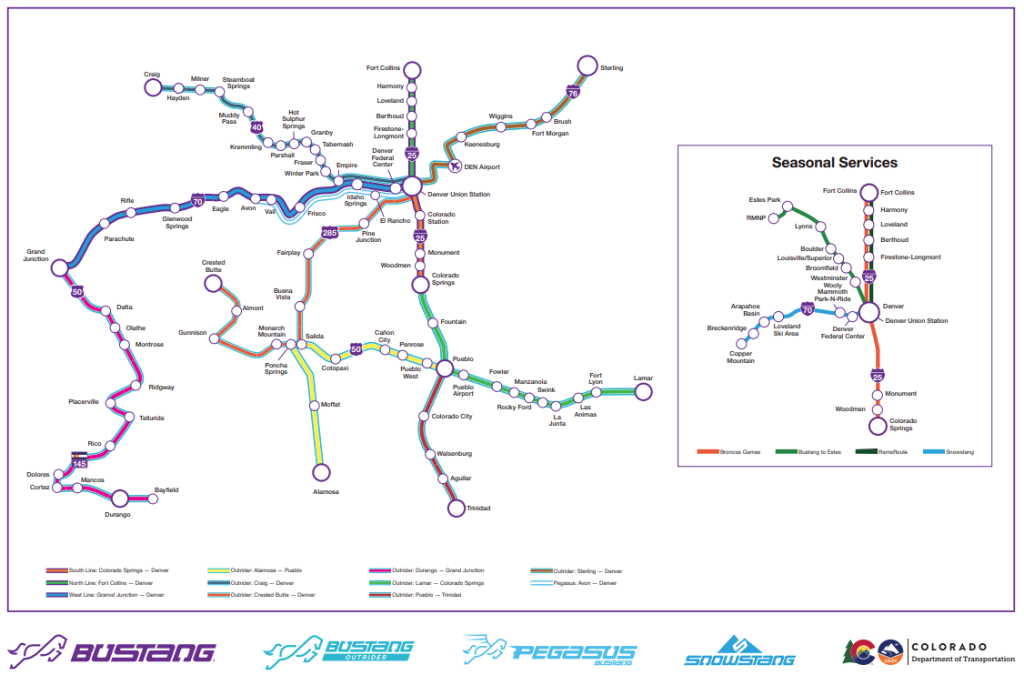
CDOT’s growing Bustang network
Better service grows ridership
Over the past several years, CDOT has doubled Bustang service on I-25 and tripled it on I-70. Since bottoming out in 2021 due to COVID, annual ridership has increased fivefold – from 70,400 to 353,400 riders. This stands in contrast to many transit agencies nationwide, including Denver’s Regional Transportation District (RTD), which has struggled to rebuild ridership.

Bustang ridership growth over the years (CDOT 2026)
Bustang’s secret to success is actually quite simple: frequent, reliable service attracts more riders. It turns out that the classic adage, “If you build it, they will come” is backed by data when it comes to public transit.
Bustang’s vision: An interstate bus rapid transit network
CDOT is not only increasing service but also investing in infrastructure to improve speed and reliability, effectively building a bus rapid transit (BRT)-like system along major interstate highway corridors.

A key component is the development of “mobility hubs.” Unlike traditional bus stops, these center-loading stations allow buses to remain in Express Lanes, avoiding time-consuming exits and reentry. Five hubs are expected to be complete by the end of this year, with more than a dozen planned over the next decade.
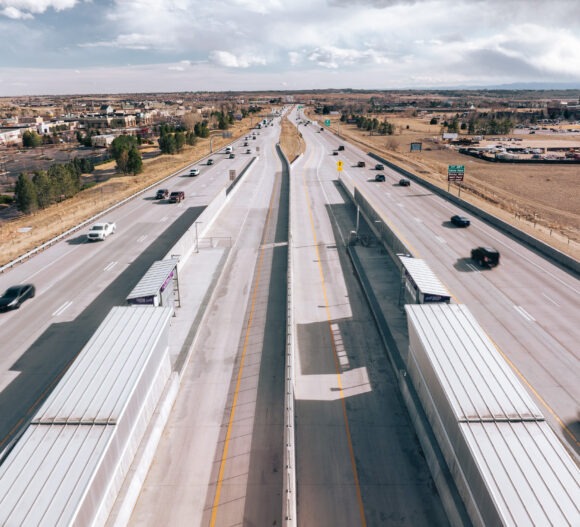
Continuous access to interstate Express Lanes allows the Bustang to bypass traffic and provide a competitive alternative to driving for the 100,000-200,000 drivers that use I-25 everyday. While drivers are at the mercy of unpredictable traffic that can easily extend a trip from Fort Collins to Denver by 30-45 minutes, Bustang’s I-25 North Line reliability delivers passengers to their destination in the Express Lane. Riders can also work, relax, and use onboard amenities like WiFi and restrooms.
This model builds on the success of RTD’s successful Flatiron Flyer on US-36 – one of the region’s most popular transit routes. The Flatiron Flyer carries about 1.3 million passengers per year, displacing 3-5% of car trips on US-36. To put it another way, it replaces over 4,000 cars per day with 172 buses, an indisputable win for congestion and pollution while also offering a more affordable transportation option for thousands of commuters.
However, the Flatiron Flyer operates about seven times more daily service than Bustang’s I-25 North Line, despite running on a corridor with even more daily car trips and greater potential to shift drivers to transit. This underscores the need not only to maintain current Bustang service, but to expand it going forward. CDOT’s Bustang expansion scenario proposes a 5% annual increase in service miles.
Intercity transit is a critical yet underappreciated solution to Colorado’s congestion and pollution challenges. Intercity travel accounts for only 3% of all trips, but 30% of vehicle miles traveled (VMT) in the U.S. Shifting even a small share of these longer trips to transit can significantly reduce driving and improve system efficiency.
Bustang’s annual ridership may appear modest compared to RTD’s, but the impact per trip is much greater. RTD’s average trip is about 6 miles, while Bustang routes range from 70 to 160 miles one way, displacing roughly 12 to 26 times more VMT per trip.
Earlier this month, CDOT highlighted Bustang’s regional benefits, such as:
- Offers low-cost transportation options: Bustang costs about $0.17 per mile, far cheaper than the $0.60–$0.85 per mile typically required to drive in Colorado.
- Improves job access: Service along the I-25 and I-70 corridors connects workers to over 1.5 million jobs.
- Spurs economic development: Every $1 invested in transit generates an estimated $5 in long-term economic value. For example, the $500 million investment in Denver Union Station has led to $3.5 billion in private investment, including business development and new housing.
- Improves equity and access: This is especially important for the nearly 30% of Coloradans who can not or choose not to drive. Bustang is a lifeline to healthcare, education, employment, and other services for these individuals.
- Reduces air pollution: Transit helps cut emissions from the largest source of greenhouse gases and the third-largest source of human-sourced air toxins in Colorado.
- Makes our roads safer: Transit is significantly safer than driving, particularly on challenging mountain corridors during winter conditions – with one tenth the traffic casualty rate of car travel.
Bustang’s looming fiscal cliff
With the SB22-180 Bustang pilot money drying up next year, Bustang faces a budget deficit of almost $30 million in 2027, growing to $40 million by the end of the decade. Without a new funding source, CDOT will be forced to significantly cut Bustang service below current levels.

Bustang’s future budget shortfall if no action is taken (CDOT 2026)
One practical solution: use highway toll revenue to fund transit
The Colorado Transportation Investment Office (CTIO) is the CDOT enterprise responsible for financing and managing Colorado’s interstate toll lanes. While it was initially created to focus on highway construction, Senate Bill 24-184 updated its mission to also support transit and multimodal transportation projects.
The majority of CTIO’s highway toll revenue is used to repay debt from Express Lane construction and fund long-term maintenance of the facilities. The agency plans to direct most of any surplus toll revenue toward completing remaining Express Lane gaps, such as I-25 North segments 3 and 4 in Adams, Broomfield, and Weld counties. Even after paying for construction and maintenance of this planned highway expansion, CTIO anticipates having $10–30 million per year available for other uses (see page 7).
Using this surplus toll revenue to fund transit makes sense – buses improve highway efficiency and reduce congestion by taking cars off the road, directly benefiting toll payers. It is essential for CTIO to fund both mobility hubs (capital expenses) and transit service (operating expenses), since the stations alone are not very useful unless the buses run frequently to move passengers.
Other states have already taken this approach to fund their transit service. Virginia’s Commuter Choice program uses toll revenue from interstate highways to fund transit and multimodal improvements on and around the corridors. For example, around 25% of I-395/95 toll revenue directly funds transit to meet program goals like “maximizing person throughput, improving mobility, supporting new and diverse travel options, and enhancing safety and reliability”.
Similarly, Virginia’s I-66 Commuter Choice program has awarded over $200 million in the last 10 years to expand bus service, build off-corridor BRT infrastructure, expand Park N Rides, procure electric transit buses, construct first/last mile bicycle and pedestrian projects to improve transit access, and support bikeshare and other Transportation Demand Management strategies like free transit passes.
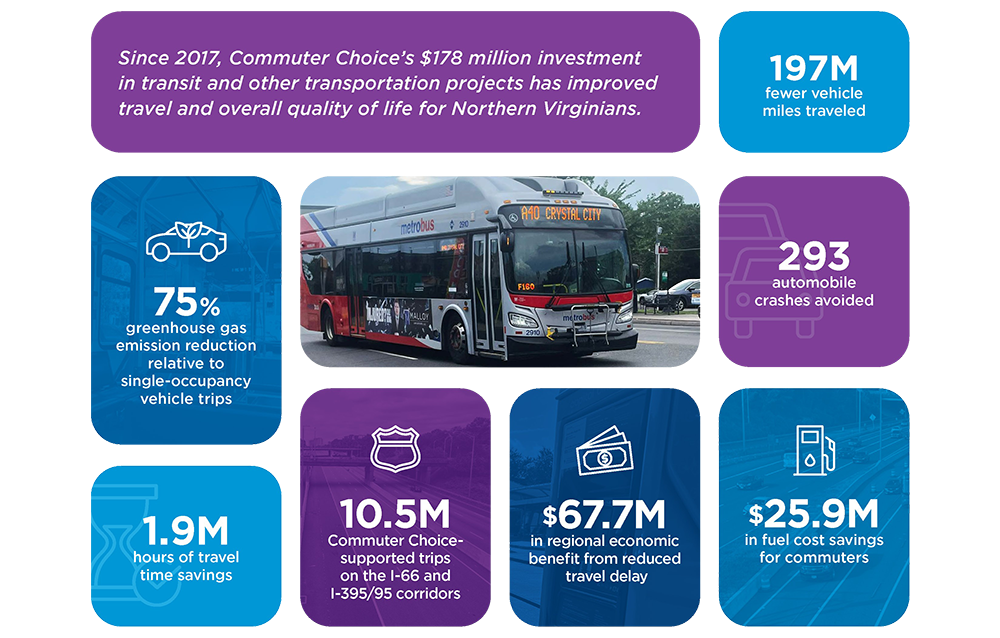
Source: Virginia’s Commuter Choice Program
While it’s critical to fully fund and expand Bustang, highway toll revenue should also be available for non-Bustang transit service operated by local transit agencies that use the managed toll lanes and provide “feeder service” to deliver transit passengers to the Bustang mobility hubs, effectively replacing car trips on the interstates and maximizing the investment into the new managed lanes and mobility hubs. For example, CTIO revenue could be used to run more buses and support first/last mile connections from cities like Fort Collins, Loveland, Longmont, and Thornton to the new I-25 Bustang mobility hubs. Surplus revenue could also fund service for routes like RTD’s 120X and FF5, which serve local travel needs along existing toll corridors where Bustang does not currently stop.
Colorado’s program could also follow Virginia’s lead by supporting transit improvements near interstate corridors. For example, the Federal Blvd BRT project is less than two miles from I-25 North and, once fully built out, could reduce the number of drivers dependent on the interstate, increasing the corridor’s efficiency without adding additional highway lanes or worsening congestion.
CTIO has already experimented with this idea with notable success. Last year, CTIO partnered with Winter Park Resorts and Amtrak to increase rail service frequency and reduce fares on the Winter Park Express, a popular rail service running from Denver to Winter Park. The service improvements helped grow ridership by 153% in 2025, reducing traffic and out-of-state congestion on I-70 West, which is currently under construction for a new toll lane. Using some of that future toll revenue to maintain and expand Bustang service along the I-70 West corridor would produce similar benefits, alleviating congestion for drivers and expanding mobility options for those who use transit.
Bustang has demonstrated that frequent, reliable intercity transit can reduce congestion, lower transportation costs, and expand access to jobs and services across Colorado. Ridership has grown at a time when most other transit agencies have struggled. But without a stable funding source, these gains are at risk. Colorado should provide long-term funding to sustain and grow Bustang service and deliver an affordable and connected multimodal transportation network that serves all Coloradans.
Header photo: cpr.org/2026/03/02/colorado-bustang-success-causes-budget-deficit