
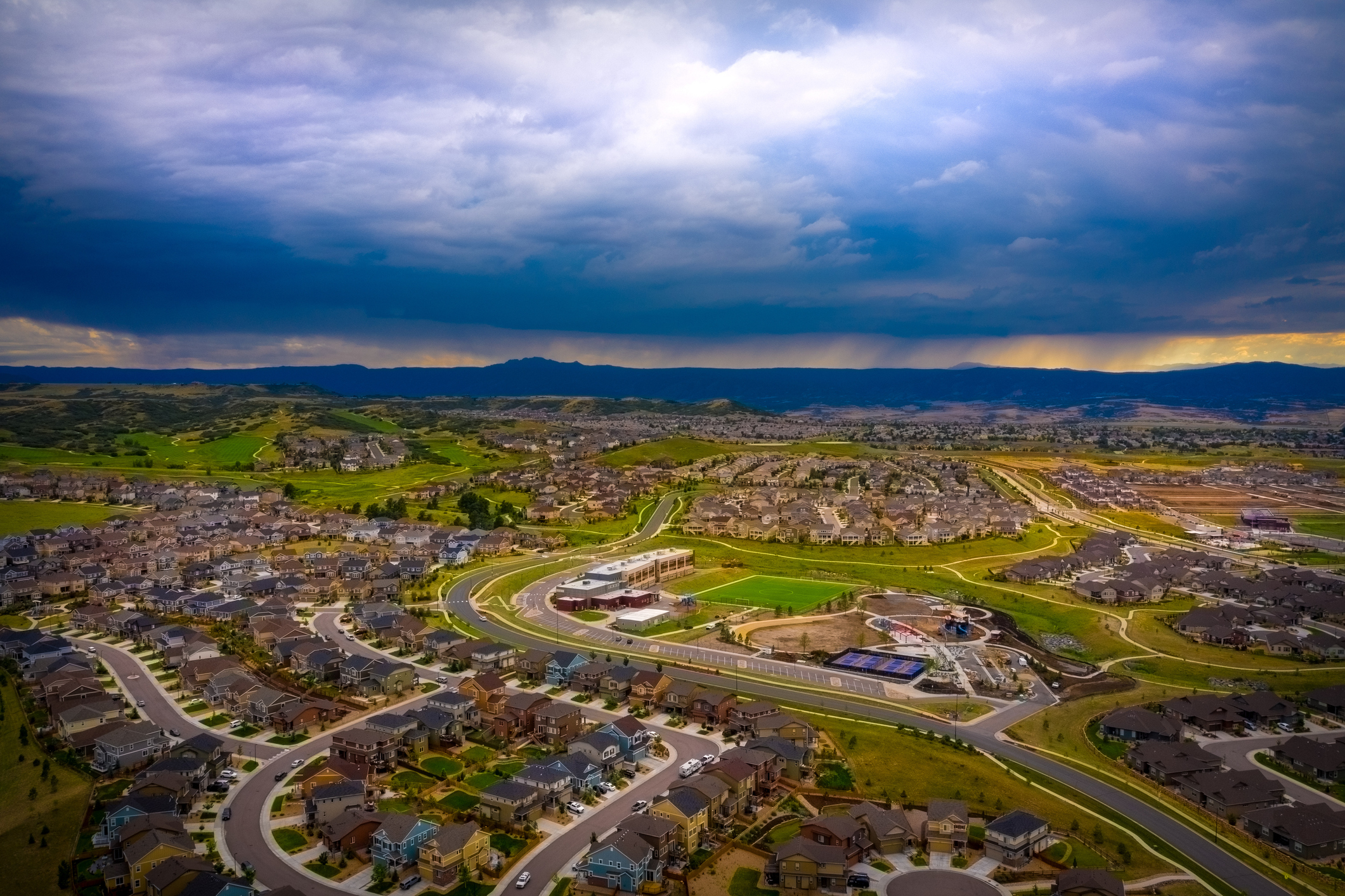
The question before us is not about whether we will grow, but how we grow.
January 14, 2026
Caroline Leland, Housing & Smart Growth Senior Associate
Matt Frommer, Transportation & Land Use Policy Manager
This report was originally published at Housing Forward Colorado (a SWEEP project).
———————————————————-
Colorado is on track to add 1.5 million people by 2050, and the state already faces a housing shortage of 106,000 homes. If we don’t build enough new homes – and build them in the right places – costs will keep rising and growth will eat away at the open spaces, scenic vistas, and wildlife that make Colorado special. We have a hugely impactful choice before us: We can add more affordable homes in existing cities and towns where roads, schools, and services already exist, or we can continue sprawling outward, paving over natural and agricultural land with large, isolated single-family homes. Strategic growth, also known as smart growth, is the only path that addresses affordability and sustainability at the same time.
In this blog post, the second in a series about strategic growth in Colorado, we describe key takeaways from a Statewide Strategic Growth Report recently published by the Colorado Department of Local Affairs (DOLA). Our first blog post in the series focused on a 2024 Colorado Energy Office study about the climate benefits of smart growth. Our next post will explore some of the policies and financing tools that impact Colorado’s growth patterns and what we can do to promote smarter growth.
The Strategic Growth Report compares a baseline “business as usual” scenario to a strategic growth scenario. On a high level, the report shows that we should prioritize infill housing in our existing developed areas rather than allowing exurban sprawl – especially when it’s dispersed, “leapfrog” development. The reasons for this are numerous: household costs, transportation impacts, energy costs, land and water conservation, infrastructure costs, wildfire risk, greenhouse gas emissions, and more.
Read the full blog post on the Housing Forward Colorado website.


