What CDOT’s 10‑Year Plan budget says about Colorado’s transportation priorities

May 26, 2026 | Matt Frommer & Chandler Sanchez

———————————————————-

On May 21, the Colorado Department of Transportation (CDOT) updated its 10-Year Plan, allocating billions of transportation dollars over the next decade that will shape how Coloradans travel for years to come. The Plan includes nearly 250 projects statewide, from repaving rural roads and building interchanges to widening highways and delivering high-quality transit. Colorado has strong goals and performance metrics for transportation, climate, and safety, some of which we’ve written about in the Southwest Energy Efficiency Project’s (SWEEP) past blog posts. However, Colorado’s real transportation priorities are reflected in its budgets, not aspirational goals, underscoring the importance of the 10-Year Plan.

When CDOT last updated its 10-Year Plan in 2022, we saw meaningful changes to the project list, suggesting a new approach to transportation planning in Colorado. This marked an earnest effort to meet our safety, affordability, and road quality goals as well as the new and ground-breaking greenhouse gas emissions (GHG) reduction rules adopted in 2021. The plan allocated significantly less money to costly highway expansions and redirected billions of dollars toward better aligned projects. For example, canceling projects like the I-25 highway widening in Denver freed up billions to spend on “fix it first” projects like resurfacing roads and repairing bridges, prioritizing the maintenance of our existing system over expensive expansion. CDOT and the Denver Regional Council of Governments (DRCOG) also committed to completing five Bus Rapid Transit (BRT) projects by 2030 and investing millions in Revitalizing Main Streets projects that improve pedestrian and bicycle safety and connectivity in downtown areas across the state. Even so, a much larger amount of funding was allocated to highway projects like the $905 million I-70 Floyd Hill expansion and the new highway lanes on I-25 North. 

In September of 2025, SWEEP joined a coalition of multimodal transportation, safety, and environmental groups to create a Storymap calling for more investment in “fix it first,” multimodal, and transit projects. We proposed dedicating 30% of transportation funding to projects that support non-driving modes, such as transit, biking, and walking, while reserving the remaining 70% for “fix-it-first” priorities that repair and maintain existing roads and bridges, ensuring that infrastructure remains safe and functional. 

In this report, we review CDOT’s updated 10-Year Plan and present recommendations for CDOT and other transportation planning agencies to deliver a more sustainable, affordable, safe, and equitable transportation system. It’s important to note that CDOT’s 10-Year Plan does not include all of Colorado’s transportation projects. Rather, it serves as a long-term planning and prioritization document, which is why it’s so important to track. A complete list of the state’s near-term transportation projects is included in the federally required Statewide Transportation Improvement Program, or STIP.

Colorado’s transportation goals: What we say we want

Last year, CDOT updated Policy Directive 14 (PD-14), its primary goals for the 10-Year Plan, to focus on three main priorities meant to guide the project selection process: 

  1. Fix Our Roads: Improve highway pavement and bridge condition. 
  1. Advancing Transportation Safety: Cut traffic deaths and serious injuries in half by 2037, including from Vulnerable Road Users (VRU) like pedestrians and cyclists.
  1. Sustainably Increase Transportation Choice:
    1. Expand statewide transit service by 83% by 2037 (6% annual increase),
    2. Reduce vehicle miles traveled per capita by 1% per year, and
    3. Cut transportation GHG emissions by 60% by 2037 from the 2005 baseline.

These priorities also reflect how the public wants CDOT to spend our transportation dollars. In 2025, CDOT hosted a series of telephone town halls to understand how Coloradans want the department to invest its funding. Respondents strongly favored a more diversified budget, with 37% allocated to transit, biking, and walking, 33% to road repair and maintenance, and just 13% to highway expansion – far less than the highway allocation in CDOT’s previous 10-Year Plan. In addition, statewide polling from March 2025 found that a majority of voters would prefer more investment in public transit over building and expanding roads – 55% to 45%. 

CDOT deserves credit for making progress on road and bridge conditions. For example, the share of interstate pavement in poor condition fell from 3.9% in 2020 to 1.6% in 2025. It will require sustained investment in repairs and maintenance to bring that below CDOT’s 1% target.

Colorado has been less successful on the safety front. As you can see below, traffic deaths and serious injuries have been rising over the last few years, and new data found 2025 deaths were even higher than 2024. The dashed orange line represents CDOT’s goal for 2037 – a 50% reduction from the 2023 numbers. 

Source: CDOT’s PD-14 Goals Dashboard. Note: VRUs are defined as “individuals who use the roadways but lack the physical protection of a vehicle.”

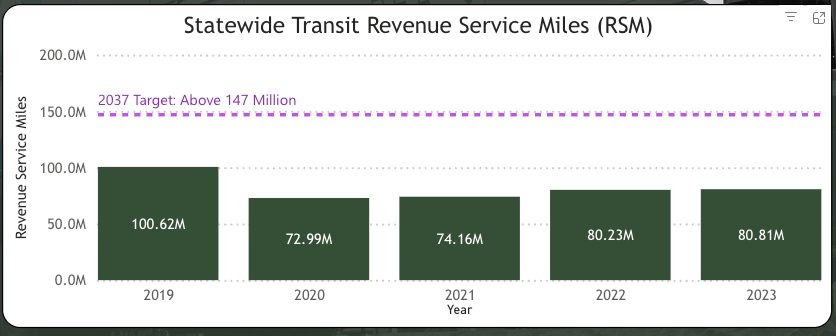
Expanding statewide transit service by 6% per year may prove similarly daunting, especially given the transit service cuts during the COVID-19 pandemic and the ongoing challenges of rebuilding ridership and securing more transit funding to grow service.
Still, the CDOT Plan includes over $10 billion worth of transportation projects, so it’s entirely possible to meet these goals if spending is well-aligned with budget decisions. 

This comes as Colorado falls behind on its climate targets, particularly in transportation, the state’s largest source of GHG emissions and a major contributor to local air pollution that disproportionately harms communities near highways. Colorado’s most recent GHG Progress Report projects transportation emissions to be 24 million metric tons (MMT) by 2030, 6 MMT above our state target. As Colorado experiences one of the hottest years on record, with low snowpack and heightened wildfire and drought risk – all while the federal government rolls back key electric vehicle and fuel-efficiency programs – this should serve as a wake-up call. CDOT must take immediate action to reduce transportation emissions.

Expanding options beyond driving is also an important opportunity to save people money at a time when cost of living and affordability are top issues facing Coloradans. A 2024 CDOT study found that reducing household driving by 10% would save Coloradans $25 billion over the next decade, mostly through lower vehicle ownership costs and fewer crashes. A household that shifts from two cars to one could save as much as $12,000 annually, potential savings that continue to grow alongside rising gas prices.

Source: Colorado Transportation Vision 2035 and SWEEP

Lastly, it’s important to acknowledge that not everyone has reliable access to a car. In fact, roughly 1 in 3 Coloradans over the age of 10 do not or cannot rely on a personal vehicle to meet their daily travel needs, including over 160,000 people of driving age who live in homes without any personal vehicles. 

CDOT’s updated 10-Year Plan largely maintains the status quo

Despite Colorado’s many pressing transportation challenges, and CDOT’s strengthened goals, its updated 10-Year Plan is largely more of the same. CDOT continues to spend far too much on highway widening at the expense of road repairs and multimodal transportation.

CDOT 10-Year Plan: Share of spending by project type

Road safety, repairs, and maintenance account for nearly 50% of the 10-Year Plan budget, while road capacity projects account for 36% and Transit and Multimodal Transportation combine for 15%. Source: Draft FY27-36 10-Year Plan

Over-investment in highway expansion continues to crowd out maintenance and multimodal options.

The 10-Year Plan includes roughly $3.7 billion in highway widening projects. While many of Colorado’s highways need repair, decades of research show we can’t build our way out of congestion with more highway lanes. When we make it easier to drive, more people choose to do it and traffic often returns to pre-construction levels within just 3–5 years. According to the US Department of Transportation, every 10% increase in highway lane miles results in a 7% increase in vehicle travel in the short-term and a 10.6% increase in the long-run, erasing most if not all of the promised congestion relief. In addition, every mile of new highway lane adds a long-term maintenance obligation of over $24,000 per mile per year.

Many of CDOT’s proposed highway expansions involve Express Lanes on I-25 and I-270, which generate toll revenue to help offset project costs over time. Some of these Express Lanes also allow buses to bypass traffic, providing a more competitive alternative to driving. However, the additional car travel filling up the new highway lanes likely outweighs many of the environmental, congestion, and transit benefits associated with the transit improvements. And while new Bustang mobility hubs and Express Lanes can improve transit quality, those benefits remain largely theoretical unless they are paired with significant increases in transit service so buses run more often, earlier in the morning, and later at night  – improvements that are largely absent from the 10-Year Plan, as Bustang and other transit operators struggle to maintain even current service levels (more on that later).

Even so, CDOT’s single largest project investment in its 10-Year Plan would add another general-purpose lane, not an Express Lane, to I-25 between 84th and 104th Avenues in Thornton, widening the highway from eight to 10 lanes along a corridor that already includes an Express Lane.

Every dollar spent on new highway lane miles is a dollar not spent on “fix-it-first” maintenance projects that repave roads, fill potholes, and save people money on car repairs. Colorado currently ranks 28th in pavement condition on urban interstates and 47th on rural interstates. Driving on rough roads costs the average Colorado driver $831 annually in additional vehicle operating costs – a total of $3.7 billion statewide. While CDOT has reduced the share of interstate pavement in poor condition in recent years, the overall backlog remains. 

Prioritizing highways also comes at the expense of transit, bicycle, and pedestrian projects. To get an idea of the opportunity cost, completing the seven unfunded BRT projects in DRCOG’s Regional Transportation Plan – over 82 miles of BRT – would cost $554 million, which is $250 million less than the planned 6.5-mile highway expansion on I-270. This map includes 12 BRT projects that are either planned or under construction in the Denver metro area:

Very little funding for pedestrian and bicycle safety projects.

The proposed 10-Year Plan makes minimal progress toward improving safety for vulnerable road users, with bike and pedestrian projects only accounting for 2% of future spending. This follows recent state budget cuts of $81.9 million from the Multimodal Transportation and Mitigation Options Fund and $7 million from CDOT’s Revitalizing Main Streets program, as well as lower federal allocations from the Safe Streets for All program. Historically, these are our main sources of funding for smaller-scale investments like sidewalk expansions, main street upgrades, downtown public plazas, trail expansions, transit stations, and bike lanes that directly benefit local communities, save lives of our most vulnerable road users, and improve quality of life.

Meanwhile, vulnerable road user deaths and serious injuries have risen by 72% since 2020. Pedestrians account for only 8% of trips but 19% of Colorado’s traffic fatalities. If CDOT is serious about improving safety, it must meaningfully invest in infrastructure that supports safer ways to travel.

Transit: Big vision, not enough funding

The updated plan includes an impressive list of more than $1.2 billion of transit projects over the next decade, but only allocates enough funding to deliver about 25% of them, excluding the most expensive rail projects that don’t yet have a project cost estimate. These 68 projects include mobility hubs, transit centers, fleet expansions, Bustang service improvements, and BRT corridors, yet only 10 receive any CDOT funding over the next decade.

More than two-thirds of CDOT’s committed transit funding, or $218.8 million, is dedicated to the Federal Boulevard BRT project serving Denver, Englewood, Adams County, and Westminster. Another $21 million is allocated for the Colorado Boulevard BRT project in the 2031–36 timeframe. In the previous version of DRCOG’s regional transportation plan, this project was scheduled for completion by 2030, making this delay a notable setback. Both projects depend on federal funding, adding uncertainty and additional implementation challenges.

When CDOT last updated its 10-Year Plan in 2022, one of the biggest takeaways was adding five BRT corridors for completion by 2030, a major win for transit advocates. However, roughly eight additional planned BRT corridors in the Denver metro area remain entirely unfunded, and none were advanced in the updated plan, likely pushing construction into the late 2030s or even the 2040s.

The bigger transit story this year, however, is the inclusion of several potentially transformative, though still underfunded, intercity transit and rail projects:

  1. Bustang: The growing intercity bus network, now operating over 20 routes across Colorado.
  2. Front Range Passenger Rail: Full train service connecting Pueblo, Colorado Springs, Denver, Boulder, Fort Collins, and other Front Range communities.
  3. Mountain Passenger Rail: Service from Denver to Winter Park, eventually extending to Steamboat Springs and Craig.

Bustang is one of Colorado’s clearest transit success stories over the last few years. Expanded routes and increased frequencies have grown ridership by five times since 2021. Although intercity driving accounts for just 3% of trips, it makes up 30% of vehicle miles traveled, making services like 70-160+ mile Bustang trips highly effective at reducing congestion, emissions, and roadway wear. 

Unfortunately, Bustang lacks a dedicated, long-term funding source and a clear growth plan, which we explored in depth this March. The recent service expansion was largely supported by temporary funding from 2022 legislation to increase frequency and add routes statewide – funding that expires this year, leaving a $25-30 million gap, around half of the total budget. CDOT is using temporary funding to keep Bustang service afloat over the next year while it works toward a more permanent solution to avoid drastic cuts in service. 

Source: CDOT September 2025 presentation to the Transportation Legislative Review Committee

The two other major transit additions to the 10-Year Plan are Front Range Passenger Rail and Mountain Passenger Rail. In April, CDOT, the Regional Transportation District (RTD), and railroad operator BNSF Railway reached an agreement to partner on delivering “joint service,” marking the first step toward launching future passenger rail between Denver and Fort Collins. Under the current plan, three daily round trips would begin in 2029 without requiring new taxes or fees, with costs shared by RTD and CDOT enterprises. Meanwhile, a separate proposal for a more robust Front Range Passenger Rail system with nine to 10 daily trips extending from Pueblo to Fort Collins could go before voters this November and would be funded through a new sales tax.

Outside the Front Range, Mountain Passenger Rail from Denver to Winter Park and Steamboat Springs could improve accessibility and support economic activity in mountain communities seeking revitalization. CDOT and the Colorado Transportation Investment Office have already invested rental car fee revenue into startup service, but making the project a reality will require far greater long-term investment.
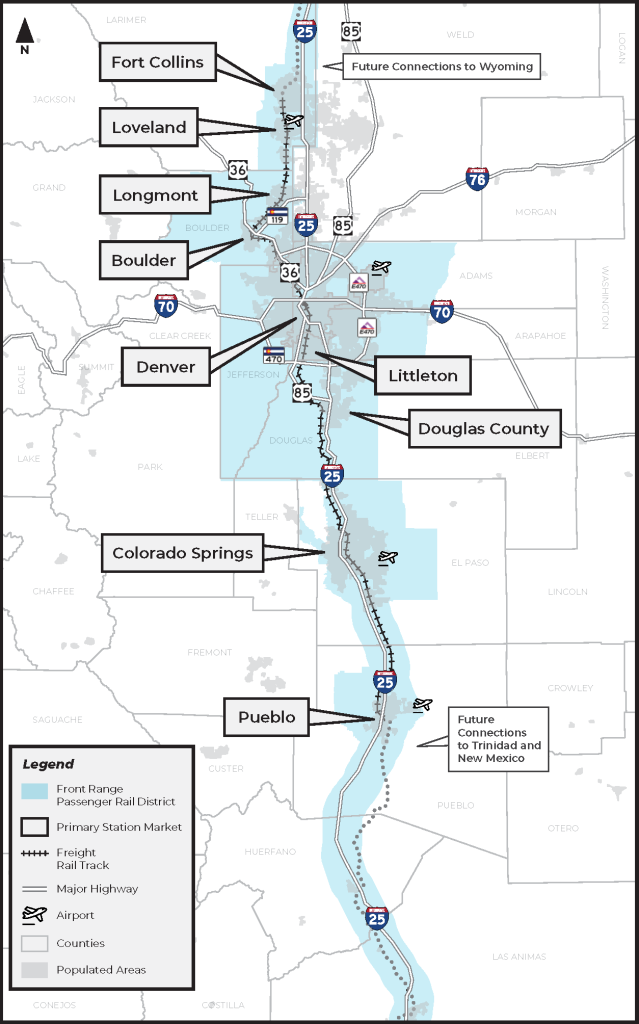
Source: Front Range Passenger Rail District

To meet the moment on transportation, Colorado should:

1. Fund Bustang long-term and integrate transit into highway investments

Highway expansion alone will not solve congestion without viable alternatives to driving. Colorado should better integrate transit, active transportation, and transportation demand management strategies into highway projects while creating a long-term funding source to expand Bustang and other interregional transit services. One option is dedicating surplus Express Lane toll revenue to bus operations and first- and last-mile connections along major corridors, helping build a BRT-like network on key interstates that improves mobility and reduces emissions. The state could also support expansion by shifting federal highway funds to transit or creating a Bustang Enterprise with dedicated revenue, similar to the Clean Transit Enterprise. Where appropriate, Colorado should also consider converting existing general-purpose lanes into Express Lanes to improve reliability and generate funding for transit and multimodal projects.

2. Accelerate deployment of “real” BRT

BRT works best when buses have their own lanes, allowing them to bypass traffic and provide a faster, more reliable alternative to driving. Dedicated bus lanes work, yet the proposed Federal Blvd BRT will share lanes with car traffic for 25% of the corridor and potentially a larger share for the Colorado Blvd BRT. A dedicated bus lane on Colorado Boulevard is expected to double transit ridership, reduce severe and fatal crashes along the corridor by 30%, and make transit service 25–35% faster. 
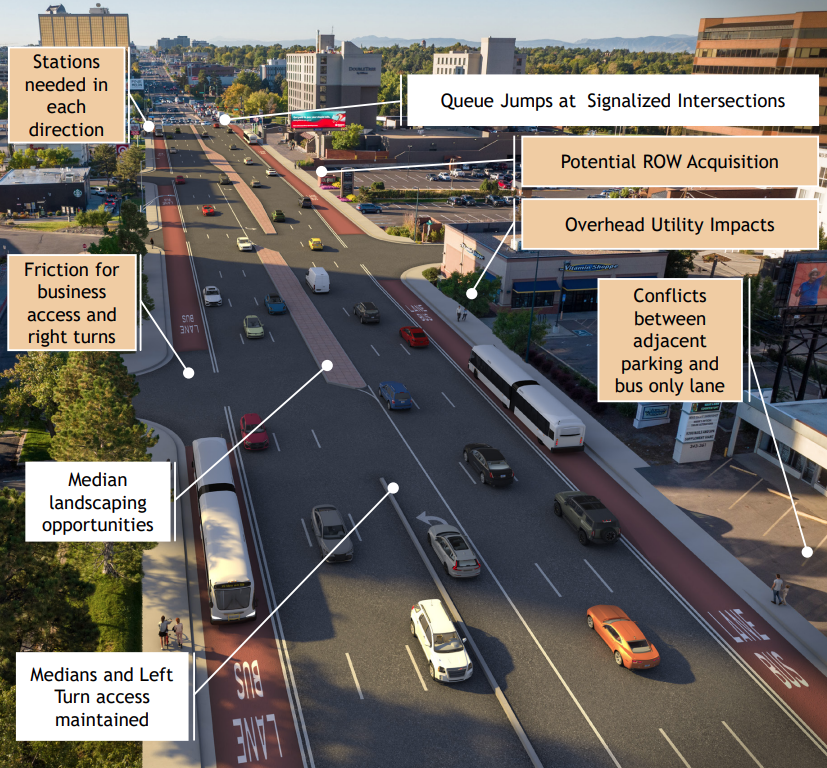
Rendering of potential Colorado Boulevard BRT design with a side-running bus-only lane.

In addition, Colorado should accelerate high-impact BRT projects that local governments have identified as top priorities but currently lack funding. Projects in Aurora (Havana/Hampden), Denver (Alameda and Speer), Fort Collins (West Elizabeth and North College Avenue), and Colorado Springs (Nevada Avenue) present major opportunities to reduce regional vehicle miles traveled and create more efficient, sustainable transportation systems.

3. Build a connected passenger rail and transit network

Much work remains to turn Colorado’s passenger rail vision into reality. CDOT must partner with regional transit agencies to ensure rail service is not only financially viable, but also fully integrated with the state’s broader transit network. That includes coordinating with local agencies like RTD and Transfort in Fort Collins to provide strong connections from rail stations to final destinations, while working with local governments to support transit-oriented development and first/last mile access.

4. Prioritize active transportation

Active transportation projects remain severely underfunded in CDOT’s budget and planning, despite their major benefits for climate, safety, public health, and quality of life. These projects are largely absent from the 10-Year Plan, and the state legislature recently reduced funding for the Multimodal Options Fund and Main Streets grant programs. CDOT should develop a statewide bike and multi-use trail network with the same level of priority and long-term planning given to the interstate highway system, connecting communities across Colorado. The Utah Rail Network offers a strong model by pairing an ambitious vision with sustained funding and implementation.

5. Fund local and regional transit

Ultimately, meeting CDOT’s goal of expanding transit service by 6% annually will require a substantial increase in funding for RTD, which provides roughly two-thirds of the state’s transit service, as well as other medium- and large-sized transit agencies. To its credit, CDOT’s Clean Transit Enterprise recently awarded the first round of SB24-230 Local Transit Operations grants to expand service statewide, including $9.3 million for RTD, a figure expected to grow in 2027.

However, current funding levels remain far below what is needed to meet Colorado’s transit demand. Other states have invested far more aggressively in local transit, often shifting federal transportation dollars from highway expansion to transit operations and service improvements. Alliance to Transform Transportation, a coalition of community, environmental, and multimodal transportation advocates, is calling for an additional $420 million annually to double transit service in the Denver region. Most of that funding would support expanded operations and dramatically increase the share of residents within a 10-minute walk of frequent transit service.

Conclusion

Colorado has set clear goals to expand transportation choices beyond driving in order to build a safer, cleaner, more affordable transportation system. As it currently stands, CDOT’s drafted 10-Year Plan is unable to achieve that vision. The plan’s overcommitment to expensive highway projects leaves transit, bike and pedestrian, and future rail projects woefully underfunded over the next decade. Balancing our spending to invest more in projects that expand transportation choices better meets the moment, enabling CDOT to actually deliver on building a more efficient, affordable, and sustainable system.

FOR IMMEDIATE RELEASE
May 15, 2026

Contacts:
Laura Wickham, Regional Senior Associate | lwickham@swenergy.org | 775-450-0973
Caitlin Gatchalian, Nevada State Representative | cgatchalian@swenergy.org | 702-337-0087

__________

[RENO, NV]Following today’s Reno City Council discussion and 6:1 vote advancing a temporary moratorium on new data center applications, perspectives from councilmembers, staff, labor representatives, industry stakeholders, and community members reflected the complexity of balancing economic opportunity, infrastructure planning, community impacts, and long-term growth in Northern Nevada. The temporary action begins a broader process, with the City expected to consider a longer-term moratorium framework on June 1st. The Southwest Energy Efficiency Project (SWEEP) and council members emphasized the importance of using this time to fast-track clear standards, accountability measures, and regional coordination that can support both economic development and long-term community interests.

Nevada is currently experiencing one of the fastest data center buildouts in the country, with electricity demand in Northern Nevada expected to grow dramatically over the next decade. Today’s discussion was never about stopping growth, but about ensuring local governments have the tools and framework necessary to manage it responsibly.

“Data centers are already part of our modern economy, and they bring important economic opportunities and jobs to the region,” said Laura Wickham, Regional Senior Associate at SWEEP. “The question is whether our policies, infrastructure planning, and public transparency mechanisms are keeping pace with the scale of growth. Today’s action creates an opportunity to make sure Reno moves forward with a clear plan and strong guardrails in place.”

SWEEP noted that Nevada currently lacks a statewide framework governing large data center energy demand, infrastructure cost allocation, water use transparency, and long-term accountability measures. In the absence of state guidance, local governments are increasingly being asked to make high-impact decisions with limited tools and regional coordination.

“Communities across Nevada deserve confidence that large new energy users will be evaluated consistently and transparently,” said Caitlin Gatchalian, Nevada State Representative for SWEEP. “This is an opportunity for Reno, Sparks, Washoe County, utilities, labor, industry, and community stakeholders to work together on a balanced regional approach that provides certainty for everyone involved.”

SWEEP also acknowledged concerns raised by labor organizations and business leaders about maintaining economic competitiveness and supporting workforce opportunities.

“There does not have to be a choice between economic development and accountability,” said Courtney Fieldman, Utility Program Director at SWEEP. “Clear standards and transparent processes can strengthen projects over the long term by reducing uncertainty, protecting existing ratepayers, and ensuring infrastructure planning keeps pace with growth.”

SWEEP encouraged local and regional leaders to use this period productively by developing consistent criteria around infrastructure impacts, water and energy use, transparency, and community benefits while coordinating with neighboring jurisdictions to avoid inconsistent standards and jurisdiction-shopping.

SWEEP remains committed to serving as a technical resource as Northern Nevada continues navigating rapid data center growth.

###

The Southwest Energy Efficiency Project (SWEEP) is a public interest organization promoting greater energy efficiency, clean transportation, and beneficial electrification in Arizona, Colorado, Nevada, New Mexico, Utah, and Wyoming. swenergy.org

Misses key opportunities to manage the impact of data centers, expand access to efficiency upgrades, and fund public transportation.
FOR IMMEDIATE RELEASE
May 13, 2026

Contact:
Josh Valentine
Communications Director, Southwest Energy Efficiency Project
jvalentine@swenergy.org

__________

[DENVER, CO]Colorado’s 2026 General Assembly concluded on Wednesday, May 13. The Southwest Energy Efficiency Project (SWEEP), a nonprofit organization working to save people money and reduce pollution, summarized and evaluated the legislature’s work on energy efficiency with the following statement:

Statement of Elise Jones, Executive Director, Southwest Energy Efficiency Project (SWEEP): “It was a really tough budget year, but legislators worked hard to shore up state finances while helping Coloradans to save money, live a higher quality of life, and benefit from efficient use of clean energy. While many good ideas did not make it to the finish line, some very important ones did.”

While closing a $1.5 billion hole in the state budget, the legislature adopted policies to make housing more affordable, to help Coloradans save money on gasoline and utility bills, and to shine a spotlight on dangerous constitutional ballot measures that voters may consider this November. In particular, SWEEP appreciates that:

The legislature acted to expand affordable housing opportunities and enable more transit-oriented development:

  • The HOME Act (HB26-1001) creates new opportunities to build homes in the communities where people live and work while increasing the supply of affordable housing. The bill allows multifamily housing and streamlines the permitting process for projects on land owned by school districts, transit agencies, and nonprofits that develop affordable housing. By focusing growth in existing communities instead of pushing sprawl onto natural and agricultural lands, the bill will reduce pollution, save households money, and move Colorado toward a more sustainable and resilient future.
  • The Transit and Housing Investment Zones Act (HB26-1065) allows local governments to use a financing tool known as tax increment financing to support more transit-oriented development (TOD). The bill creates opportunities to use future increases in state sales tax revenue around transit stations, including RTD rail stations and planned Front Range Passenger Rail and Mountain Rail stations, to fund transportation infrastructure that unlocks affordable housing and mixed-use development. It also includes up to $50 million in affordable housing tax credits to support projects near transit hubs. TOD is a proven strategy for creating more affordable, climate-friendly housing that is well connected to jobs and services without requiring residents to rely on a car.

The legislature helped to improve the efficiency and affordability of Colorado’s transportation system:

  • Electric vehicles (EVs) are one of the most powerful tools to save people and businesses money on getting around. Charging an EV at home at night in the Denver metro area is the equivalent of paying about 90 cents per gallon for gasoline. That’s more than four times cheaper than local gas prices. However, in January, Colorado’s passenger EV tax fell to just $750, half as much as it would have been in better state fiscal circumstances. That – plus the loss of the $7,500 federal EV credit – has considerably slowed Colorado’s EV market, making it harder for Coloradans to escape the burden of high gasoline prices. With HB26-1289, the legislature boosted the state passenger EV credit to $2,000 for 2027, while focusing support on the affordable end of the market (vehicles that cost $50,000 or less), where it can make the most difference in helping lower- and moderate-income Coloradans save money. The bill further makes an extra $2,500 credit available for vehicles that cost $40,000 or less. Additionally, the bill restores the original value of state tax credits for zero-emission trucks, e-bikes, lawn equipment, and heat pumps – helping to at least partially offset the recent loss of federal support for efficiency. The bill responsibly pays for these and other improvements by closing a variety of tax loopholes.
  • Public transportation connects people to opportunity by providing access to essential jobs, schools, healthcare, and services – especially for those who don’t drive or can’t afford a car. Fast, frequent, and reliable transit gives people more choices about how and where they live and work. To help give the Denver area better transit, the legislature adopted SB26-150, which modernizes RTD’s governing board structure. Starting in 2028, the new nine-member board will be composed of five elected members and four appointed by the Governor. Members must bring subject matter expertise in public finance, land use and multimodal transportation planning, transit operations, or serving disproportionately impacted communities. Additionally, the bill increases pay for board members, recognizing how important good leadership is for delivering effective service.
  • HB26-1007 will give more Coloradans access to technologies that can save them money, including meter collar adapters. People who live in older houses that have smaller electricity panels might need to spend thousands of dollars to upgrade their service to be able to add a home Level 2 EV charger. This has become even more challenging since Congress got rid of the federal panel upgrade tax credit in last summer’s budget bill. Panel upgrade costs can be avoided with a meter collar adapter designed to safely connect an EV charger without needing to upgrade electric service.

The legislature helped Coloradans to save money on utility bills and access more clean energy:

  • The legislature took an important step to protect ratepayers and support Colorado’s clean energy transition by reauthorizing the Public Utilities Commission (PUC) via HB26-1326. The PUC regulates the state’s largest electric and gas utilities. The bill extended the PUC’s oversight powers and strengthened its regulatory tools so it will be better able to ensure that customers get the most value for their money; to promote cleaner, more affordable energy and to achieve Colorado’s statutory climate protection goals. Notably, the legislature authorized the PUC to require a utility to contract with a third party – such as the state’s Building Decarbonization Enterprise – to run programs aimed at saving energy, reducing energy bills, or reducing pollution, if the Commission determines that would deliver better results.
  • SWEEP worked with the legislature and industry stakeholders to adjust emission standards for residential and small commercial furnaces and water heaters, as part of SB26-002. After it became clear that compliant equipment was not locally available for systems used in manufactured homes or systems fueled by propane, SWEEP worked on an amendment to extend compliance timelines for these applications by five years – while preserving the strength and integrity of Colorado’s broader suite of leading appliance efficiency standards, which are working to save Coloradans energy and money. 

The legislature helped shine a spotlight on the harmful effects of several proposed constitutional ballot measures:

  • The Colorado Contractors Association is now collecting signatures on proposed amendment 175 to the state constitution that would take $700 million annually from the state general fund and steer it to roads, which would force the legislature to cut funding for schools and hospitals. The legislature responded with HB26-1430, which would protect the general fund from losses in the event that 175 qualifies and passes. The bill also creates a new Road Funding Enterprise charged with maintaining state highways. The enterprise will be funded by new fees on oversize and overweight vehicles, which have an outsized impact on road conditions.
  • The legislature discussed a possible bill to counter Advance Colorado’s proposed measure 177, which would enshrine a “right to natural gas” in the state constitution. While legislators ultimately did not introduce a bill, the discussion at the legislature raised public awareness of how the measure might affect public safety or efforts to reduce air pollution.

The legislature also missed key opportunities, including:

The legislature failed to enact guardrails on data center construction and make energy efficiency upgrades more accessible to income-qualified customers.

  • Data centers are placing enormous demands on the electric grid that could raise costs for households and small businesses without protective measures. SWEEP-supported SB26-102 would have required data center companies to procure their own clean energy resources and pay their full share of any grid infrastructure upgrades, protecting other customers from cost shifting. It would also have kept the state on track to meet its clean energy targets. While the bill failed, the legislature also blocked the competing HB26-1030, which would have provided tax incentives for data centers without sufficient consumer or environmental protections. SWEEP looks forward to renewed attempts to address this issue in the next legislative session. 
  • Many energy efficiency upgrades require an up-front investment, paid back over time with savings on utility bills. Lower income families are often less able to afford the initial investment, and thus miss out on savings opportunities. SB26-148 would have enabled utility on-bill repayment programs for home energy upgrades, in which customers could pay the cost of an efficiency upgrade gradually over time on their regular utility bill with no upfront costs. SWEEP will work to expand accessible low-interest financing options for energy efficiency in future sessions.

The legislature fell short on other efforts to increase housing options and transit funding.

  • HB26-1114 and HB26-1308 would have reduced excessive minimum lot size requirements and allowed homeowners to split existing lots into smaller parcels, making it easier to build smaller and more affordable starter homes in existing neighborhoods. These bills would have helped lower housing costs, reduce sprawl into open space and agricultural land, and support more climate-friendly growth patterns. Read our blog post about these bills here.
  • To reduce the state’s budget shortfall, the legislature cut $10.5 million from the Multimodal Options Fund, which supports transit, bicycle, and pedestrian projects. The Joint Budget Committee originally proposed to permanently end all general fund support of this program. While legislators did not actually go that far this year, SWEEP hopes to shore up support for the fund in future budgets.
  • Stakeholders, legislators, and the state discussed legislation that would have allowed Colorado to use the Colorado Transportation Investment Office’s toll revenue to support Bustang service and other transit investments in managed lanes, creating a more stable long-term funding source for the state’s rapidly growing intercity transit network. However, without sufficient consensus, legislators never actually introduced a bill. With SB22-180 funding set to expire and Bustang facing a major budget shortfall, the concept could have helped sustain expanded service, avoid major cuts, and advance Colorado’s vision for a statewide “Interstate BRT” system connected by high-frequency transit and mobility hubs. SWEEP will continue to build support for long-term funding in future years.

SWEEP thanks the many legislators who worked tirelessly to champion good ideas, engage stakeholders in dialogue, craft workable compromises, and help build a better future for all Coloradans. We look forward to working with a new class of elected leaders in 2027 to open new doors to help Coloradans save money and reduce pollution.

###

The Southwest Energy Efficiency Project (SWEEP) is a public interest organization promoting greater energy efficiency, clean transportation, and beneficial electrification in Arizona, Colorado, Nevada, New Mexico, Utah, and Wyoming. swenergy.org

May 7, 2026
Jim Meyers, Building Efficiency Specialist

———————————————————-

For most Americans, building codes are background noise: the permits, inspections, and rules that come with every construction project. But for federally recognized tribal nations in the United States, building codes hold much greater meaning: they symbolize an act of sovereignty. Building codes are a self-governing nation’s authority to define the safety, health, and cultural identity of its built environment, and to protect the well-being of elders and future generations alike. The history of tribal code enactment spans generations, their form and character as diverse as the communities themselves. Many tribes have successfully enacted their own building codes tailored to their community’s needs, despite cultural and regulatory differences in modern western code development. One such community is the Salt River Pima-Maricopa Indian Community (SRPMIC), whose approach can serve as a roadmap to those starting out on their journey.   

The legal landscape and persistent national challenges

Tribal nations have inherent governmental power over their trust lands, a right that predates the U.S. Constitution. This means state and local building codes do not automatically apply. The Indian Self-Determination and Education Assistance Act of 1975 (25 U.S.C. § 5301 et seq.) empowered tribes to contract for local services, including building design and construction, rather than work solely through the Bureau of Indian Affairs. The Native American Housing Assistance and Self-Determination Act of 1996 (NAHASDA) (25 U.S.C. § 4101 et seq.) focused on self-determination for tribes, providing tribes broad authority to choose how to use the affordable housing funds they receive.1 Both acts were turning points. It gave tribes greater freedom and incentives to enact and implement their own building codes.

Even with this legal freedom, advancing tribal building codes faces ongoing national challenges. First, standard model codes like the International Building Code and International Residential Code were not designed with tribal needs, culturally specific space requirements, or traditional construction methods in mind. Second, many smaller tribal nations encounter staffing gaps and access to training for inspectors needed to enforce their codes. Lastly, economic pressures and housing shortages create urgency to build, often leading to conflicts with regulatory costs.

Overcoming the hurdles: The SRPMIC approach

The SRPMIC, located in the Southwest, shows how a tailored approach can effectively tackle these challenges. As it celebrates the 30th anniversary of its Engineering and Construction Services (ECS) department, SRPMIC has developed a skilled team of 10 who manage 500 to 600 permits a year.To address the issue of standard codes not fitting tribal needs, SRPMIC avoids merely adopting standard language with local amendments. Instead, the tribe customizes templates that meet their specific daily requirements and environmental conditions.

To tackle staffing gaps, the ECS department focuses on cross-training. This helps permit technicians and inspectors handle various compliance tasks. The department also prioritizes hiring and supporting community members, leading to impressive staff retention. For larger capacity needs, they keep all residential work safely in house while retaining a network of tribal-approved third-party consultants for commercial inspections.

To ease economic pressures on residents, ECS ensures that all residential permitting is free, removing financial obstacles to code compliance for tribal members.

Protecting the past: Cultural sensitivity and resource fees

Preserving cultural identity is crucial for SRPMIC, which is why they require that all construction personnel undergo Cultural Sensitivity Training. Contractors and subcontractors must take an online course (40 minutes in English, an hour in Spanish) focusing on tribal history, greetings, and artifact preservation.

Before any permit can be issued, a site must obtain a clearance memo from the Environmental Protection Department. This department employs ecologists, biologists, and archaeologists to ensure that no artifacts are disturbed. To support these educational resources, the community implemented a 1% Cultural Resource Fee on permits (or a flat $10 for smaller projects), directly linking construction growth to heritage preservation.

Community-first construction: The SHRRP program and mobile home safety

SRPMIC’s commitment to addressing housing pressures is evident in its Senior Home Repair and Replacement Program (SHRRP).3 This initiative fully funds housing repairs for tribal members aged 55 and older and/or those with disabilities, allowing tribal elders to age in place. Whether updating ADA-compliant bathrooms, fixing termite-damaged structures, or replacing roofs, the community covers the costs and uses in-house staff for repairs.

The community also takes action on mobile home safety. Given the open terrain and high winds, which included two recent tornadoes, the ECS department strictly enforces anchoring, tie-downs, and dead-load requirements. They have assigned a policy that no mobile home older than June 15, 1976, is permitted. To assist residents, ECS provides free foundation soil testing and hosts educational sessions to inform members about the safety features to look for when buying a mobile home.

Technological innovation and streamlined workflows

As new house builds have increased from about five a year to 15-20, ECS has quickly modernized its tools. During the COVID-19 pandemic, the department shifted from “massive rolls of paper” to Bluebeam for electronic plan reviews. This allows up to six review departments to mark up plans simultaneously in a centralized, trackable workspace. Looking ahead, they plan to move to the Tyler Technologies Energov platform4 to greatly improve inspection scheduling and data management.

To help commercial contractors, the department created a practical construction site poster. This tracking tool helps site managers visually organize all necessary permits, such as fire alarm and sprinkler permits, and ensures inspections are scheduled correctly. It even contains a direct digital link to the state elevator inspector to avoid delays, ensuring the construction site workflow operates smoothly.

A two-way street: Indian country is teaching the ICC

With custom community care programs, culturally integrated building requirements, and efficient regulatory tracking, nations like SRPMIC demonstrate another pathway the entire industry can follow to connect safety with dignity and sovereignty, and regulatory bodies are taking notice.

In 2024, the International Code Council (ICC) officially recognized Native American Code Officials (NACO) as its first Sovereign Chapter.5 6  As building officials across the country observe, tribal building code innovation benefits everyone: “This is where Indian Country is teaching the ICC,” says Matthew Beaudet, co-founder and board member of NACO.

  1. NAHASDA – https://www.hud.gov/helping-americans/public-indian-housing-nahasda
  2. ECS – https://srpmic-nsn.gov/government/ecs/construction-compliance/
  3. SHRRP – https://srpmic-nsn.gov/government/ecs/shrrp/
  4. Tyler Tech Energov – https://www.tylertech.com/Portals/0/OpenContent/Files/1678/ENERGOV-Product-Brochure.pdf
  5. NACO – https://joinnaco.com/
  6. ICC – https://www.iccsafe.org/building-safety-journal/bsj-news/establishment-of-naco-as-the-first-sovereign-chapter-of-the-international-code-council/

FOR IMMEDIATE RELEASE
April 17, 2026

Contact:
Josh Valentine, Communications Director
jvalentine@swenergy.org

__________

[BOULDER, CO]The Southwest Energy Efficiency Project (SWEEP) is proud to recognize its 2026 Allies — a diverse group of organizations helping advance energy efficiency, electrification, and clean energy solutions across the Southwest.

This year’s Allies reflect the full spectrum of the energy efficiency and clean energy economy. Leading national nonprofits and advocacy organizations such as ACEEE, Alliance to Save Energy, Building Performance Association, Smart Energy Consumer Collaborative, and U.S. Green Building Council continue to drive research, policy, and market transformation efforts that underpin progress across the region. Industry groups like the American Chemistry Council also play an important role in advancing materials innovation and supporting the development of more efficient, lower-emission technologies.

Financial and programmatic innovators like Energy Outreach Colorado and the Center for Energy and Environment are expanding access to energy efficiency and clean energy solutions, particularly for underserved communities, while organizations like The Climate Registry are advancing transparency and accountability in emissions tracking.

SWEEP’s Allies also include a strong group of engineering, consulting, and implementation partners — including DNV, ICF, TRC, CLEAResult, Michaels Energy, Resource Innovations, Franklin Energy, and Cascade Energy — who help design and deliver the programs that bring energy savings to homes, businesses, and industries.

Manufacturers and technology leaders such as Daikin Comfort Technologies, Dandelion Energy, Trane Technologies, Owens Corning, Johns Manville, Knauf, and NAIMA are driving innovation in heating, cooling, geothermal systems, insulation, and building materials, helping make high-performance buildings more accessible and affordable.

SWEEP also partners with organizations advancing sustainable building design and engineering, including Green Building Initiative, Lotus Engineering & Sustainability, and Group14 Engineering, which provide technical expertise in energy modeling, sustainable design, and building performance to support more efficient, resilient buildings.

In the rapidly evolving electrification and mobility space, companies like Rivian, Renew Home, and Pearl are helping accelerate the transition to electric vehicles, smarter homes, and more efficient residential energy systems.

Finally, SWEEP works with infrastructure and energy service providers such as Cordia, ENFRA, Evergreen Energy Partners, and Western Mechanical Solutions, which are helping modernize energy systems and deliver large-scale efficiency and decarbonization projects across the region. SWEEP also values the leadership of local governments such as the City of Denver, which continues to serve as a model for advancing energy efficiency and climate solutions at the municipal level.

Together, these Allies play a critical role in supporting SWEEP’s mission to advance practical, cost-effective energy solutions that lower costs, reduce pollution, and improve quality of life across the American Southwest.

###

The Southwest Energy Efficiency Project (SWEEP) is a public interest organization promoting greater energy efficiency, clean transportation, and beneficial electrification in Arizona, Colorado, Nevada, New Mexico, Utah, and Wyoming. swenergy.org

Lakewood voters roll back zoning reform in low-turnout special election, halting local efforts to expand affordable housing options.

April 9, 2026
Matt Frommer, Transportation & Land Use Policy Manager

This report was originally published at Housing Forward Colorado (a SWEEP project).

———————————————————-

After years of housing studies, planning workshops, town halls and community events, and meticulous zoning code updates, Lakewood’s pro-housing reforms were erased overnight in a low-turnout special election. 

The special election concluded with 35,574 votes, representing roughly 32% of the city’s registered voters. For comparison, 72–73% of Colorado’s registered voters participated in the 2024 election, more than twice the turnout rate seen in Lakewood this week. Additionally, the ballot questions were widely seen as confusing for Lakewood voters. A “no” vote indicated support for the new zoning rules, while a “yes” vote opposed them. (See the ballot question language at the bottom of this page.)  

This outcome highlights the advantage that special elections can offer to organized anti-growth activists. In fact, a similar playbook was used in 2019, when Lakewood voters approved the Strategic Growth Initiative (SGI) to cap new housing development, a move that significantly chilled housing construction in Lakewood and contributed to rising housing costs. New housing permits dropped from 915 new homes in 2019 down to 179 in 2024. Over the same time period, average home values in Lakewood grew by 42%, partially caused by the lack of housing supply. The SGI was later removed by a 2023 state law that prohibits cities from capping residential growth.  

Research consistently shows that the residents most likely to participate in local zoning debates and special elections tend to be older, wealthier homeowners who bought into their communities years ago at much lower prices, and have more time and capacity to engage in public processes than renters, essential workers, or young families.

As a result, a select minority dominates the conversation, while those most affected by the housing shortage are underrepresented, or entirely absent. This includes people who work in these communities but cannot afford to live there, forcing them into long commutes. Though they contribute to the local economy, they have no voice at the ballot.

Statewide context: Housing as a collective action problem

“Housing affordability” and “cost of living” have consistently been the top issues facing Colorado voters. These issues are difficult to solve because housing transcends municipal boundaries, and Colorado has a longstanding tradition of local control over land use and frequent use of anti-growth local ballot measures.

While the social, economic, and environmental benefits of allowing more housing options are well documented, they are often overshadowed by fears of change and imaginary worst-case scenarios at the neighborhood level. It might even seem rational to oppose change when a city feels like it’s acting alone in an effort to solve a regionally shared problem; global efforts to tackle climate change suffer from this same problem. When popularly elected officials take politically difficult steps to adopt evidence-based housing policies that can reduce costs and support more walkable communities, their efforts can be undone by a small but highly organized minority of anti-growth constituents. 

In Lakewood’s case, the zoning reforms adopted by the city council were backed by a public mandate based on community outreach, strongly favorable public opinion surveys conducted by the city, and a broad range of support from affordable housing developers to environmental groups to the state AARP chapter. The city’s Strategic Housing Plan, adopted in February 2024, recommended smaller lots and homes, and included a public survey finding 50% support for, and only 33% opposition to, allowing middle housing in single-family zones – providing strong evidence to the city council that the community was ready for change.

Nearly every housing study commissioned by local governments across Colorado points to similar solutions – most notably, allowing “middle housing” types in traditionally single-family neighborhoods.  Yet Lakewood is not alone in facing political backlash from vocal minorities. Similar efforts have stalled or been reversed in cities as varied as Fort Collins, Colorado Springs, Littleton, and Englewood. In some cases, opposition efforts are accompanied by ballot measures or recall campaigns. This creates a real disincentive for city councils to support the policies necessary to solve the housing crisis. 

While local governments can adopt meaningful pro-housing policies, and should continue striving to do so, the political dynamics are often stacked against them. This dynamic helps explain why state legislatures across the U.S. have become more involved in land use and housing policy. With a broader vantage point and better capacity for incentivizing collective action, state leaders are better positioned to consider regional housing needs rather than the preferences of individuals. If anything, Lakewood’s recent vote underscores the rationale behind this shift.

And yet, local efforts remain essential, even when progress is inconsistent or contested. Lakewood’s history of ballot-box zoning fights makes it a particularly challenging environment for housing reform, and a questionable test case for other cities wondering how their efforts might play out. Cities from Denver and Boulder to Grand Junction are continuing to move toward allowing small and more affordable homes in their communities. We encourage others to join them.

March 26, 2026 | Chandler Sanchez & Matt Frommer

———————————————————-

By Chandler Sanchez and Matt Frommer

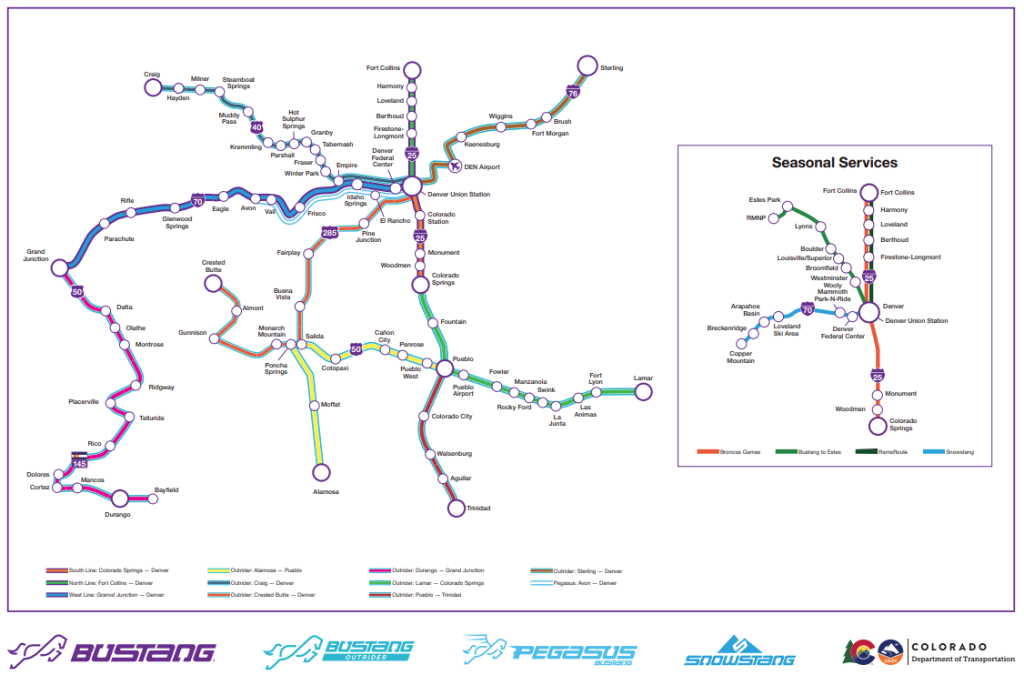
The Colorado Department of Transportation’s (CDOT) intercity Bustang transit service has become a rare transit success story in recent years, earning national recognition as a model for state-led transit expansion that could be replicated across the U.S. Bustang launched in 2015 to connect job centers along Colorado’s I-25 and I-70 corridors. It expanded in 2018 with the Outrider network, reaching communities from Durango to Craig to Sterling to Alamosa. In 2019, CDOT added seasonal services like Snowstang to destinations such as Estes Park, along with Pegasus, smaller shuttles connecting Denver and Vail. 

Recognizing strong demand for these services, the Colorado legislature passed Senate Bill 22-180 to fund a three-year expansion pilot and double frequency on key corridors like I-25 North and South and I-70 West. These investments align with Colorado’s goals to reduce congestion and pollution, lower transportation costs, and expand travel options beyond driving. In 2025, the CDOT Commission set a target to grow statewide transit service by 6% annually over the next decade – an 83% increase by 2037.

Bustang’s growth has been dramatic. In 2015, the West Line between Denver and Grand Junction operated just one roundtrip per day. Today, it runs 15 daily roundtrips, with departures from Denver Union Station every 45–60 minutes for much of the day. All of this could change next year as one-time federal and state Bustang funding dries up, which has prompted a conversation at CDOT about potential funding options, like toll revenue.

CDOT’s growing Bustang network

Better service grows ridership

Over the past several years, CDOT has doubled Bustang service on I-25 and tripled it on I-70. Since bottoming out in 2021 due to COVID, annual ridership has increased fivefold – from 70,400 to 353,400 riders. This stands in contrast to many transit agencies nationwide, including Denver’s Regional Transportation District (RTD), which has struggled to rebuild ridership.

Bustang ridership growth over the years (CDOT 2026)

Bustang’s secret to success is actually quite simple: frequent, reliable service attracts more riders. It turns out that the classic adage, “If you build it, they will come” is backed by data when it comes to public transit.

Bustang’s vision: An interstate bus rapid transit network

CDOT is not only increasing service but also investing in infrastructure to improve speed and reliability, effectively building a bus rapid transit (BRT)-like system along major interstate highway corridors.

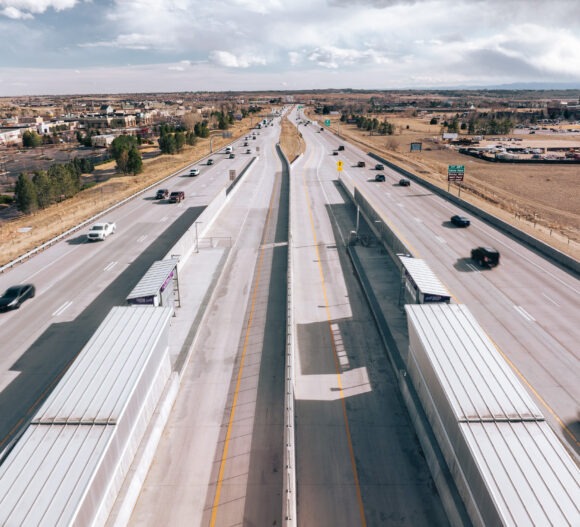
A key component is the development of “mobility hubs.” Unlike traditional bus stops, these center-loading stations allow buses to remain in Express Lanes, avoiding time-consuming exits and reentry. Five hubs are expected to be complete by the end of this year, with more than a dozen planned over the next decade.

Continuous access to interstate Express Lanes allows the Bustang to bypass traffic and provide a competitive alternative to driving for the 100,000-200,000 drivers that use I-25 everyday. While drivers are at the mercy of unpredictable traffic that can easily extend a trip from Fort Collins to Denver by 30-45 minutes, Bustang’s I-25 North Line reliability delivers passengers to their destination in the Express Lane. Riders can also work, relax, and use onboard amenities like WiFi and restrooms.

This model builds on the success of RTD’s successful Flatiron Flyer on US-36 – one of the region’s most popular transit routes. The Flatiron Flyer carries about 1.3 million passengers per year, displacing 3-5% of car trips on US-36. To put it another way, it replaces over 4,000 cars per day with 172 buses, an indisputable win for congestion and pollution while also offering a more affordable transportation option for thousands of commuters. 

However, the Flatiron Flyer operates about seven times more daily service than Bustang’s I-25 North Line, despite running on a corridor with even more daily car trips and greater potential to shift drivers to transit. This underscores the need not only to maintain current Bustang service, but to expand it going forward. CDOT’s Bustang expansion scenario proposes a 5% annual increase in service miles. 

Intercity transit is a critical yet underappreciated solution to Colorado’s congestion and pollution challenges. Intercity travel accounts for only 3% of all trips, but 30% of vehicle miles traveled (VMT) in the U.S. Shifting even a small share of these longer trips to transit can significantly reduce driving and improve system efficiency. 

Bustang’s annual ridership may appear modest compared to RTD’s, but the impact per trip is much greater. RTD’s average trip is about 6 miles, while Bustang routes range from 70 to 160 miles one way, displacing roughly 12 to 26 times more VMT per trip.

Earlier this month, CDOT highlighted Bustang’s regional benefits, such as:

  • Offers low-cost transportation options: Bustang costs about $0.17 per mile, far cheaper than the $0.60–$0.85 per mile typically required to drive in Colorado.
  • Improves job access: Service along the I-25 and I-70 corridors connects workers to over 1.5 million jobs.
  • Spurs economic development: Every $1 invested in transit generates an estimated $5 in long-term economic value. For example, the $500 million investment in Denver Union Station has led to $3.5 billion in private investment, including business development and new housing.
  • Improves equity and access: This is especially important for the nearly 30% of Coloradans who can not or choose not to drive. Bustang is a lifeline to healthcare, education, employment, and other services for these individuals. 
  • Reduces air pollution: Transit helps cut emissions from the largest source of greenhouse gases and the third-largest source of human-sourced air toxins in Colorado.
  • Makes our roads safer: Transit is significantly safer than driving, particularly on challenging mountain corridors during winter conditions – with one tenth the traffic casualty rate of car travel.

Bustang’s looming fiscal cliff

With the SB22-180 Bustang pilot money drying up next year, Bustang faces a budget deficit of almost $30 million in 2027, growing to $40 million by the end of the decade. Without a new funding source, CDOT will be forced to significantly cut Bustang service below current levels. 

Bustang’s future budget shortfall if no action is taken (CDOT 2026)

One practical solution: use highway toll revenue to fund transit

The Colorado Transportation Investment Office (CTIO) is the CDOT enterprise responsible for financing and managing Colorado’s interstate toll lanes. While it was initially created to focus on highway construction, Senate Bill 24-184 updated its mission to also support transit and multimodal transportation projects. 

The majority of CTIO’s highway toll revenue is used to repay debt from Express Lane construction and fund long-term maintenance of the facilities. The agency plans to direct most of any surplus toll revenue toward completing remaining Express Lane gaps, such as I-25 North segments 3 and 4 in Adams, Broomfield, and Weld counties. Even after paying for construction and maintenance of this planned highway expansion, CTIO anticipates having $10–30 million per year available for other uses (see page 7).

Using this surplus toll revenue to fund transit makes sense – buses improve highway efficiency and reduce congestion by taking cars off the road, directly benefiting toll payers. It is essential for CTIO to fund both mobility hubs (capital expenses) and transit service (operating expenses), since the stations alone are not very useful unless the buses run frequently to move passengers.

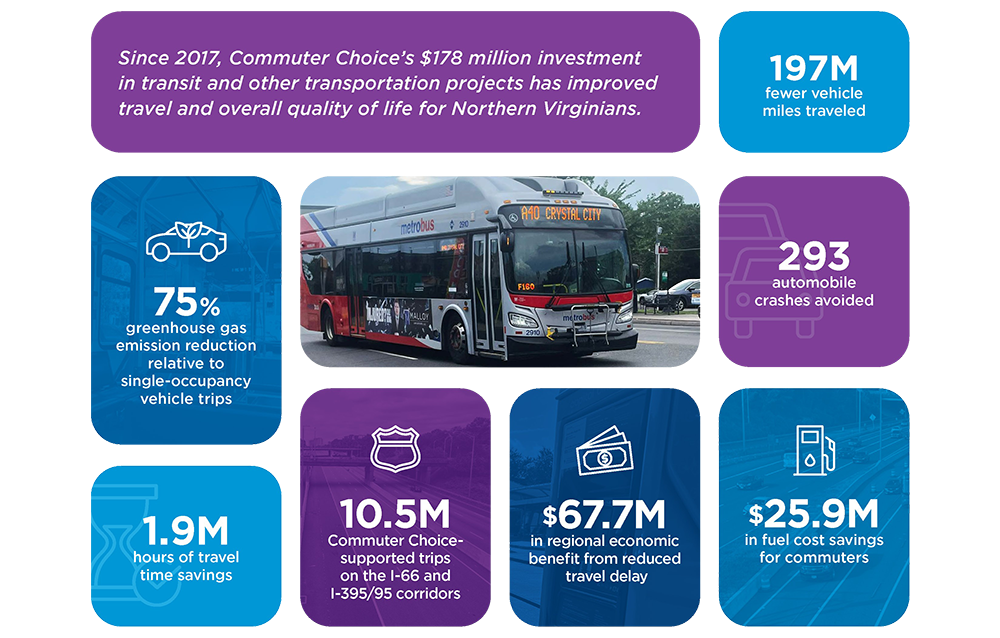
Other states have already taken this approach to fund their transit service. Virginia’s Commuter Choice program uses toll revenue from interstate highways to fund transit and multimodal improvements on and around the corridors. For example, around 25% of I-395/95 toll revenue directly funds transit to meet program goals like “maximizing person throughput, improving mobility, supporting new and diverse travel options, and enhancing safety and reliability”. 

Similarly, Virginia’s I-66 Commuter Choice program has awarded over $200 million in the last 10 years to expand bus service, build off-corridor BRT infrastructure, expand Park N Rides, procure electric transit buses, construct first/last mile bicycle and pedestrian projects to improve transit access, and support bikeshare and other Transportation Demand Management strategies like free transit passes. 

Source: Virginia’s Commuter Choice Program

While it’s critical to fully fund and expand Bustang, highway toll revenue should also be available for non-Bustang transit service operated by local transit agencies that use the managed toll lanes and provide “feeder service” to deliver transit passengers to the Bustang mobility hubs, effectively replacing car trips on the interstates and maximizing the investment into the new managed lanes and mobility hubs. For example, CTIO revenue could be used to run more buses and support first/last mile connections from cities like Fort Collins, Loveland, Longmont, and Thornton to the new I-25 Bustang mobility hubs. Surplus revenue could also fund service for routes like RTD’s 120X and FF5, which serve local travel needs along existing toll corridors where Bustang does not currently stop.

Colorado’s program could also follow Virginia’s lead by supporting transit improvements near interstate corridors. For example, the Federal Blvd BRT project is less than two miles from I-25 North and, once fully built out, could reduce the number of drivers dependent on the interstate, increasing the corridor’s efficiency without adding additional highway lanes or worsening congestion.

CTIO has already experimented with this idea with notable success. Last year, CTIO partnered with Winter Park Resorts and Amtrak to increase rail service frequency and reduce fares on the Winter Park Express, a popular rail service running from Denver to Winter Park. The service improvements helped grow ridership by 153% in 2025, reducing traffic and out-of-state congestion on I-70 West, which is currently under construction for a new toll lane. Using some of that future toll revenue to maintain and expand Bustang service along the I-70 West corridor would produce similar benefits, alleviating congestion for drivers and expanding mobility options for those who use transit. 

Bustang has demonstrated that frequent, reliable intercity transit can reduce congestion, lower transportation costs, and expand access to jobs and services across Colorado. Ridership has grown at a time when most other transit agencies have struggled. But without a stable funding source, these gains are at risk. Colorado should provide long-term funding to sustain and grow Bustang service and deliver an affordable and connected multimodal transportation network that serves all Coloradans. 

Header photo: cpr.org/2026/03/02/colorado-bustang-success-causes-budget-deficit

March 6, 2026 | Alex Eubanks, New Mexico Representative

———————————————————-

New Mexico’s 2026 legislative session moved fast, and for clean energy and climate policy the results were mostly disappointing. The session’s signature climate proposal, Clear Horizons (SB18), failed on the Senate floor. Other priorities tied to affordability, grid reliability, and responsible planning for rapid load growth also fell short in the compressed timeline.

At the Southwest Energy Efficiency Project (SWEEP), we came into the session focused on practical policies that help New Mexico manage new electricity demand without driving up bills or backsliding on climate progress. That meant supporting Clear Horizons as a durable, statewide planning framework, pushing for basic oversight of large private power systems tied to data centers, and advancing utility modernization tools that help reduce peak demand and keep system costs in check.

New Mexico is at an inflection point: we’re facing rapid load growth and real affordability pressures at the same time we’re trying to stay on track with climate goals. This session delivered an important step forward on industrial decarbonization, but we still need to finish the job on emissions targets and the utility reforms that help manage peak demand, protect ratepayers, and keep new large loads from driving the wrong outcomes.

A meaningful win: Industrial decarbonization and low-carbon materials (HB153)

In a session with more missed opportunities than wins, one major policy did make it across the finish line. SWEEP supported Representative Meredith Dixon and coalition partners, led by the Natural Resources Defense Council, in the successful push to pass HB153, an industrial decarbonization and low-carbon materials package, which is now awaiting the Governor’s signature. 

HB153 is designed to accelerate both the supply and demand for lower-carbon construction materials by:

  • Helping projects buy low-carbon materials when cost is a barrier.
  • Expanding consistent, comparable emissions information for purchasers.
  • Supporting in-state manufacturers with tools to invest in lower-carbon production and compete in markets that increasingly require verified low-carbon materials.

Why this matters: construction materials and industrial products are a significant source of climate pollution, and procurement standards are changing quickly. HB153 helps New Mexico manufacturers and builders prepare for that reality, while supporting climate goals and economic competitiveness.

What fell short: Clear Horizons, data center safeguards, and peak-demand solutions

Clear Horizons (SB18)

Clear Horizons was the session’s signature climate proposal. It would have codified New Mexico’s statewide emissions reduction targets in statute, creating a clearer long-term framework for planning and accountability. SWEEP supported the bill alongside coalition partners, but it failed on the Senate floor.

Microgrid oversight and data center safeguards (SB235)

In addition, SWEEP joined a broad coalition supporting microgrid oversight (SB235) protections for large private power systems tied to data centers. SB235 would have put qualifying microgrids under New Mexico’s Public Regulation Commission (PRC) oversight and required them to meet a clean energy portfolio standard on the same timeline New Mexico already applies to utilities, along with annual reporting on energy generation and water use. The bill also included explicit protections to prevent utility rate increases to cover microgrid infrastructure development. SB235 passed the Senate but did not advance in the House before the session ended.

Two utility modernization bills that advanced, but did not reach final passage

Virtual power plants (HB 311)

SWEEP supported HB311 because virtual power plants can be a lower-cost reliability resource that pays customers for verified performance from technologies many households and businesses already use, such as smart thermostats, managed electric vehicle charging, and batteries. The bill cleared its first House committee, but did not advance further before adjournment.

Avoided greenhouse gas emissions in utility cost tests (HB254)

SWEEP supported HB254 to modernize how cost-effectiveness is evaluated for utility efficiency and load management programs. The bill would have allowed the PRC to incorporate the value of avoided greenhouse gas emissions into statutory cost-effectiveness tests. Developed with partners including El Paso Electric and Western Resource Advocates, HB254 passed the House unanimously but did not advance in the Senate before the session ended.

A transition moment for New Mexico policy

This was the final regular session of term-limited Governor Michelle Lujan Grisham, which makes this a natural transition point for long-term policy planning. Energy policy is getting more complex, and the stakes for affordability, reliability, and emissions outcomes are getting higher as new large loads and electrification reshape the grid.

Lawmakers also advanced HJR5, a proposed constitutional amendment that would allow legislative compensation. New Mexico is currently the only state where legislators receive no base salary for their service; lawmakers receive per diem and mileage reimbursements while the Legislature is in session and for interim committee work. If voters approve HJR5, it would allow legislative compensation tied to New Mexico’s median household income. SWEEP views this as a constructive step toward professionalizing legislative service and broadening who is able to serve, which can strengthen policymaking capacity over time.

What we do next

The session ended, but the work did not. SWEEP will continue working with coalition partners, state agencies, utilities, and regulators throughout the interim to:

  • Keep New Mexico moving toward its emissions reduction goals through practical implementation and utility planning work.
  • Advance utility reforms and programs that reduce peak demand, strengthen reliability, and keep bills manageable.
  • Ensure large private power systems and data center-related infrastructure meet basic standards for transparency and consumer protection.

We look forward to working with legislators, stakeholders, and the next administration to advance durable solutions that keep bills manageable, strengthen reliability, and support responsible economic growth in the years ahead.

Update: Since this post was published, Governor Michelle Lujan Grisham vetoed HB153. The veto message says the bill’s goals remain important, but the Governor concluded the package was too rigid as drafted and directed the Environment Department to move forward this year on key pieces that can be implemented through the existing appropriation.

Colorado cities are moving fast to access state funding for infrastructure supporting affordable housing under HB24-1313.
FOR IMMEDIATE RELEASE
February 20, 2026

Contact:
Caroline Leland
Outreach & Organizing Manager for Housing Forward Colorado
cleland@swenergy.org | 252-450-9281

__________

[DENVER, CO]Well ahead of an end-of-year deadline, four Colorado cities have met the initial requirements for Transit Oriented Communities Infrastructure (TOCI) grants, receiving more than $13 million total in the preliminary round of funding. To be eligible at this point in time, cities must be close to final certification as a “Transit Oriented Community” (TOC) under a state law called HB24-1313: Housing in Transit Oriented Communities. Cities’ quick action to become certified demonstrates this law’s positive impacts on statewide housing and land use, amidst a shortage of 106,000 homes and a fast-growing population.

In this pilot round of funding, the Department of Local Affairs awarded $13,327,830 to the following cities:

  • Denver – Broadway Station Pedestrian Bridge Project – $4,000,000
  • Fort Collins – Switchgrass Crossing Infrastructure – $792,434
  • Longmont – Downtown Transit Hub at 1st & Main – $4,000,000
  • Wheat Ridge – Ridge Road Infrastructure Project – $4,535,396

Wheat Ridge was the first city to submit a final compliance report under HB24-1313 and – pending final approval – will use its grant money for public improvements for Ridge Road, a 200-unit mixed-income housing project adjacent to the Arvada Ridge G line light rail station. The site includes a planned expansion of Red Rocks Community College’s nursing program, enabling students to live affordably near school.

“We were motivated to apply for certification early because we had heard about the TOCI grant program and we had an affordable housing project with our regional housing authority, Foothills Regional Housing,” said Wheat Ridge Senior Housing Planner Shannon Terrrell. “This grant program and project align because it’s bringing affordable housing and workforce housing near the community college and light rail infrastructure.”

“We are focused on how these laws are creating opportunities for us to implement our own policies and priorities set through our affordable housing action plan, and our goals around multimodal transportation and housing densification where it’s feasible,” said Wheat Ridge Mayor Pro Tem Rachel Hultin. “The TOC certification aligns with goals we’ve already set.”

Fort Collins anticipates receiving TOC certification by late April. The city updated its commercial corridors zoning last year to allow more mixed use and encourage more housing development. After the City Council reviewed the state law’s requirements and learned about the associated funding opportunities, it directed staff to draft updates to the city’s Land Use Code to streamline the review process for multifamily development in designated Transit Centers, and to designate four additional zones as Transit Centers. The Council is expected to approve those changes in late March or early April. Pending final certification, the city will use funding from HB24-1313 for an affordable housing project for seniors.

“We’re really excited to take advantage of the funding and use this as an opportunity to streamline some of our own processes,” said Fort Collins City Councilor Chris Conway. “It’s been a great opportunity for Fort Collins to look at some processes that needed to be changed.”

Longmont’s award will help fund a mixed-use downtown transit hub for bus rapid transit service near rail infrastructure for the future of passenger rail. 

“This grant award will help Longmont achieve the city’s long-term goal for transit-oriented development,” said Jenn Ooton, Assistant City Manager. “This transformational project helps catalyze the city’s active work to advance multiple opportunities for affordable housing projects in this general area. This grant will enable Longmont to continue making progress towards its transit, housing, and sustainability goals.”

The TOCI grant program helps close the funding gap preventing cities from building more infill housing, but it is insufficient to meet every city’s needs. HB26-1065: Transit and Housing Investment Zones is a bill introduced on January 21 of this year that takes another step further to close that gap. Housing Forward Colorado encourages proponents to testify in favor of the bill when the House Finance Committee considers it on February 23.

Colorado’s stark housing housing shortage gives it the fifth highest home prices and third highest rent in the country. Demographers expect Colorado to add another 1.5 million people by 2050, growing to a population of more than 7.5 million – with most of that growth concentrated along the Front Range. This shortage drives affordability challenges, as limited housing supply leads to intense competition and rising prices. Moreover, the lack of new housing opportunities near transit, jobs, schools, and other destinations increases pressure to sprawl into open spaces and natural lands – resulting in longer commutes, more pollution, and higher land and water consumption.

Housing Forward Colorado is working with local communities to implement solutions to these problems, ensuring that Colorado builds homes people can afford in the places they want to live.

###

Housing Forward Colorado is a project of the Southwest Energy Efficiency Project (SWEEP), a public interest organization promoting greater energy efficiency, clean transportation, and beneficial electrification in Arizona, Colorado, Nevada, New Mexico, Utah, and Wyoming. In spring 2025, SWEEP launched Housing Forward Colorado to advance pro-housing and smart growth policies, and to support the effective implementation of the 2024 state land use laws.
housingforwardco.org swenergy.org